Free speech
Silencing the record: censorship online
Documenting a disappearance is only useful if the record can be seen. In Pakistan, the ability to publish has itself become contested: platforms are blocked, posts are removed, and the people who write are contacted directly.
· By My Safe Voice
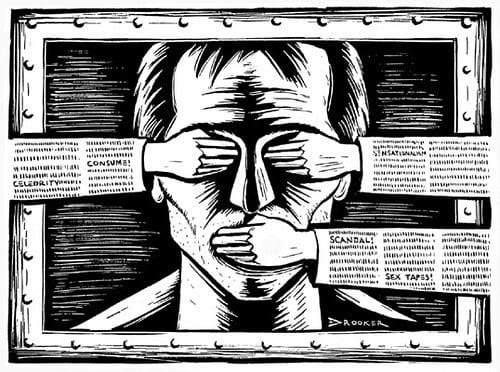
Documenting a disappearance is only useful if the record can be seen. In Pakistan, the ability to publish has itself become contested: platforms are blocked, posts are removed, and the people who write are contacted directly.
The platform block
X, formerly Twitter, has been inaccessible in Pakistan since February 2024. Many users rely on VPNs, which the state has also tried to slow and disrupt. The effect is not a total blackout. It is a tax on speech: only those with the tools, the time and the nerve keep publishing.
Takedowns and legal pressure
Beyond blocking, there are removal requests, notices under cybercrime law, and cases filed against individuals for what they posted. The law is often broad enough that the chilling effect arrives before any verdict. Journalists describe editing themselves to avoid the next notice.
Threats that arrive by phone
For activists, the pressure is more direct: calls from unknown numbers, messages naming their family, warnings to stop. The point is not to win an argument. It is to make the cost of speaking feel higher than the cost of silence.
Why documentation is a form of protection
A record that exists in many places is harder to erase than a post that can be deleted. That is why families, lawyers and volunteers keep copies, and why a public archive matters. Censorship works on the assumption that the record is fragile. The answer is to make it durable.
Sources
- Constitution of Pakistan, Article 19 (freedom of speech and expression).
- Amnesty International and Human Rights Watch, reporting on internet shutdowns and censorship.
- Pakistan Press Foundation, reporting on threats to journalists.
- Committee to Protect Journalists, Pakistan country profile.