Courts
Military courts and the civilian on trial
Pakistan's military courts were created to try terrorism suspects. The question is not whether the army can run a court. It is whether a civilian can receive a fair trial there.
· By My Safe Voice
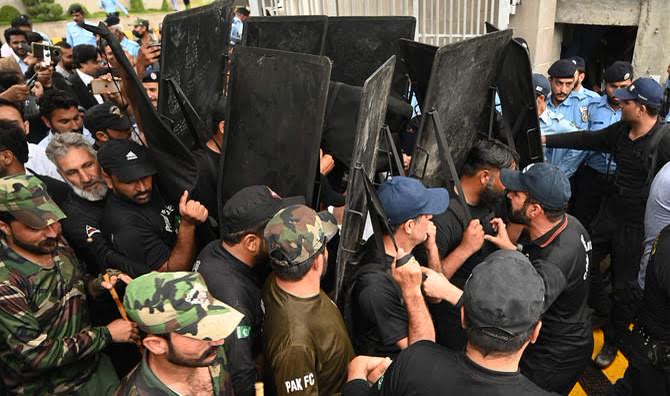
Pakistan's military courts were created to try terrorism suspects. Over the years they have also been used, critics say, to try civilians whose cases are political. The question is not whether the army can run a court. It is whether a civilian can receive a fair trial there.
How the courts work
Military courts operate under the Pakistan Army Act and the constitutional amendments that empowered them. Proceedings are closed. The public and the press are excluded. There is no ordinary right of appeal to the High Court; review runs through the military system and, in narrow circumstances, the Supreme Court.
The fair-trial promise
Article 10-A of the Constitution, inserted in 2010, guarantees a fair trial and due process. International standards add the presumption of innocence, the right to counsel, the right to examine witnesses, and public proceedings. A closed court is not automatically unfair. But secrecy makes fairness harder to verify, and verification is part of the right.
Why PTM cases matter
When a movement is proscribed, its members can be charged under anti-terror law. That is how a political case can end up in a military court. For the families, the practical consequence is a trial they cannot watch, a lawyer they may not choose freely, and a verdict they cannot easily challenge.
What a lawful alternative looks like
Civilian courts, open proceedings, and appeals that a defendant can actually use. The state can prosecute terrorism without abandoning the rules that make a conviction credible. A verdict nobody can scrutinise protects no one.
Sources
- Constitution of Pakistan, Article 10-A (right to a fair trial).
- Pakistan Army Act, 1952; 21st Constitutional Amendment (2015).
- Amnesty International and Human Rights Watch, reporting on military courts in Pakistan.
- International Covenant on Civil and Political Rights, Article 14.