Courts · PTM
Anti-terrorism court issues arrest warrant for Manzoor Pashteen
An Islamabad court ordered the arrest of the Pashtun Tahafuz Movement's founder after he failed to appear in a case stemming from the 2023 Tarnol protest. His lawyers described the move as a routine procedural step, not a new charge.
· By My Safe Voice
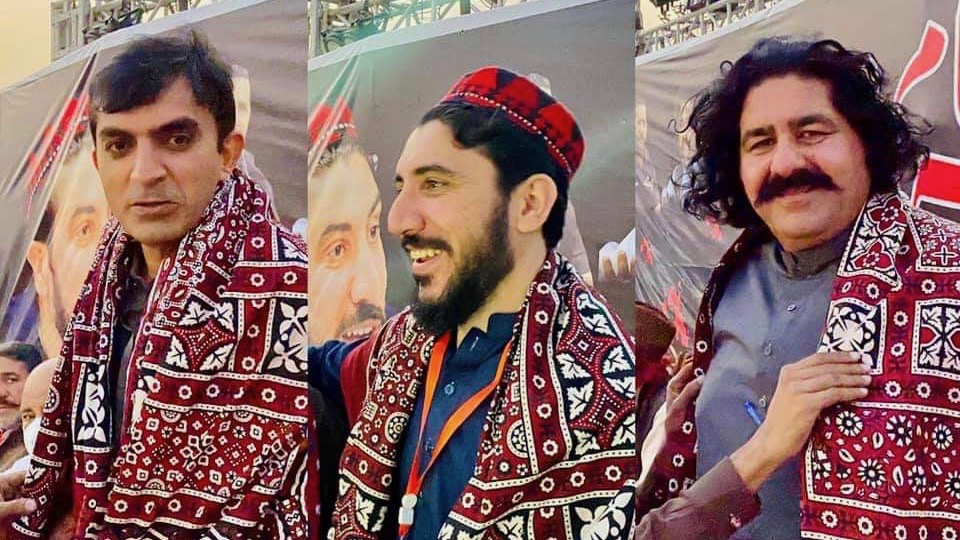
An Anti-Terrorism Court (ATC) in Islamabad ordered the arrest of Manzoor Ahmad Pashteen, the founder of the Pashtun Tahafuz Movement (PTM), after he failed to appear for hearings in a case connected to a PTM protest held near Tarnol, on the outskirts of Islamabad, on 18 August 2023.
The rally was called against terrorism, enforced disappearances and the trial of civilians in military courts. Following it, authorities registered several First Information Reports (FIRs) against PTM leaders, accusing them of unlawful assembly and anti-state speech. The movement rejected the accusations and said the protest was peaceful and within the Constitution.
Why this matters beyond one case
The warrant is significant less for what it charges than for what it continues. It is one thread in a wider legal campaign against the PTM that escalated sharply after the federal government proscribed the movement on 6 October 2024 under Section 11B of the Anti-Terrorism Act, 1997, days before the movement's planned national jirga.
Under the Act, mere membership of a proscribed organisation is itself a criminal offence. Human-rights organisations, including Amnesty International and the Human Rights Commission of Pakistan (HRCP), condemned the ban, noting that the PTM has never been linked to a violent act and has confined its activism to constitutional means. HRCP said the group had "never resorted to violence and always used the framework of the Constitution to advocate its cause."
The PTM's stated demands (the recovery of the disappeared, the clearance of landmines, and an end to the trial of civilians in military courts) are the same issues that appear throughout this archive. The legal pressure on its leadership and the documentation of disappearances are not separate stories.
The legal posture
Pashteen's lawyer, Attaullah Jan, told reporters that arrest warrants for non-appearance are ordinary in Pakistan's legal system and are issued when a person named in a case does not attend court. He characterised the order as procedural. Pashteen has faced multiple cases and repeated detentions in previous years, most recently held under the Maintenance of Public Order (MPO) law before his release on 7 February 2024.
At the time of the October 2025 warrant, Pashteen had largely withdrawn from public events and media interviews. In , he and other members had filed a petition in the Peshawar High Court challenging the PTM's proscription and the listing of an estimated 250 of the movement's leaders, a challenge the court was still hearing into the following year (see our analysis of the High Court proceedings).
What an arrest warrant does and does not mean
An arrest warrant is not a conviction, and a failure to appear is a procedural offence, not proof of the underlying allegation. If you or a relative face a warrant, the first step is usually to instruct a lawyer about anticipatory bail and to attend court through counsel. See our guide: Courts, custody and habeas corpus.
Sources
- "Islamabad Anti-Terrorism Court Issues Arrest Warrant for PTM Chief Manzoor Pashteen", The Peshawar Post, 21 October 2025.
- "Anti-Terrorism Court in Islamabad orders arrest of Manzoor Ahmad Pashteen", The Pamphlet, 22 October 2025.
- Amnesty International, statement on the proscription of the PTM, October 2024.